
|
Individual (Executive) Coaching In a coaching relationship, the client is not a client in the traditional sense. The client becomes a "virtual partner" (research chorts, advocates, sharing wisdom, etc...). The exchange of value in a coaching relationship is "value for value" not product for money like buying commodities or time for money like accounting services or money for money like investing in the stock market. The value the coach delivers is resources, wisdom, expertise, strategies and tools. The value the client delivers is money, client input and wisdom, client advocacy and loyalty. The investment made by the coaching client is a long-term investment. The client reaps the return on investment in coaching over time in increasing amounts. Studies have shown that over 93% of executives who have received professional coaching would recommend it to others. Professional coaching is not directive like football coaching where the coach tells someone what to do. It is collaborative. The focus is on the client “raising the bar” for themselves. The coach is an expert on the process of coaching. The client is the expert on the content (themselves and their work). Simply put, coaching is used to support your key objectives, people and training initiatives. Coaching helps you create more choices, shorten your time of improvement and increase your chance of follow-through. “What impact will coaching have on your performance?” Coaching focuses on increasing:
· Executive Productivity & Time/Energy Management
· Revenue and Margin Results
· Employee Performance & Development
· Customer Satisfaction and
· Retention of Best Performers
"How do you discuss coaching with someone?" "What does a coach do you cannot do yourself?" - Answer - You can't be your own judge
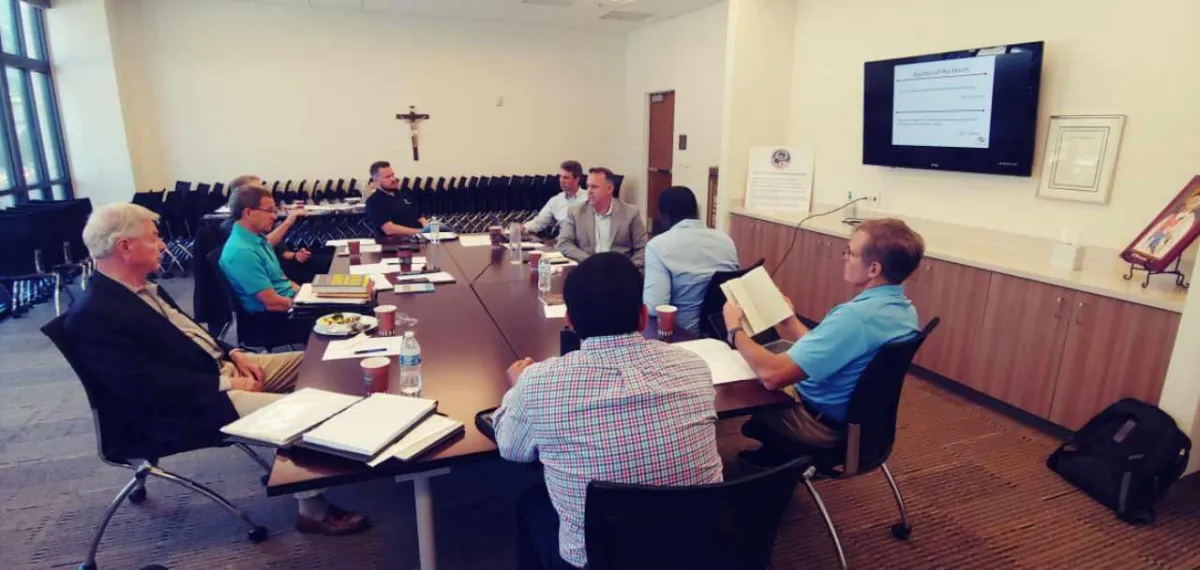
Group Coaching Group Coaching is a facilitated group process lead by a professional coach and created with the intention of maximizing the combined energy, experience and wisdom of individuals who are interested in achieving organizational objectives and individual goals. Membership can come from divisions of the same company, employees in different divisions/departments, or individuals in the larger community and/or trade/industry associations. Individual and Group Accountability – Group members give updates and feedback and make commitments to their coach and the group while assuming the ultimate responsibility for taking actions and achieving results themselves. The group may be designed to meet an overall organizational or company objective, but the implementation focuses on what each participant needs to succeed on her/his specific goals. The process is designed to have the participants experience being well coached, so they can then take actions aligned with their individual and professional goals and incorporate coaching tools and skills in their lives. Types of Groups that best benefit from Group Coaching · Sales professionals within an affiliated company who have their own offices and staff. · Corporate executives in peer groups with a common business/leadership focus. · Managers integrating coaching skills to supervise their teams better. If you are reading this page, you might be interested in the article I wrote below on the value a Facilitator & Coach brings to your strategic planning meetings. Are You Aware That 80% of Strategic Plans Are Written and Never Implemented? (Part 1 of 2) Written by Darren Smith How do you shake the staleness out of your strategic planning meeting and improve implementation? This is one of the great "unanswerable questions" in business similar to when a child spills their milk and the parent asks "why did you spill your milk?" Below, in part one, we will begin to shake the staleness out by increasing the efficacy or energy of your strategic planning meeting (SPM) and improving implementation. Many SPM's are similar in format. For example, participants perform an internal/external scan, GAP or SWOT analysis and set goals and accountabilities. Also, an in-house resource is often used to facilitate and lead the SPM. Unfortunately, this can inject bias through the personal views of the in-house facilitator, their relationship with participants and the omission of their participation as a member of the SPM team. What value could a professional facilitator bring to your strategic planning meetings? Besides eliminating the chance of the bias mentioned above, the best professional facilitators bring a calculated energy level (generated by a different group dynamic), skilled listening and the ability to direct the focus on the meeting participants.
What value could group coaching skills add to professional facilitation? The rise of professional group coaching in corporate planning began about five years ago after a McKinsey study discovered that 80% of strategic plans were written and never implemented. Even with the best professional facilitation there can be occasions when results-altering information does not come-out during the SPM. Also, there is usually the challenge with follow-through after the SPM is over. This is where a professional facilitator who is also a group coach (facilitator & coach) can help further activate the intent of the SPM by drawing-out additional needed information and improving implementation by applying coaching skills therefore increasing the ROI of the SPM.
In other words a facilitator & coach helps improve implementation: - through acute questioning tools which create a more sophisticated and effective meeting process. For example, a group coach knows when, how and why to use an acute question.
- after actions and accountabilities are determined by the group, the facilitator & coach can support individual participants or the group with follow-through using professional coaching skills.
In part two, we will look at an example of a strategic planning meeting and show how various acute questioning tools such as sympathetic, conciliatory and leading questions are used to add value to the SPM.
|